Category: Academics

  • Compressible Flow Final Project

    Compressible Flow Final Project

    Compressible Flow

    As an Aerospace Engineering student pursuing my undergraduate and graduate degrees at the same time, I decided to take a class called ‘Compressible Flow’ for dual credit. That being said, the main difference between the undergrad and grad section was an additional research project. 

    I am specializing in dynamics and control systems theory, so I thought it would be interesting to do a study of how mach number affects a control surface’s deflection. I couldn’t find any reference material on the matter, so all calculations and theory is based on my own assumptions. 

    Shock Expansion Theory

    Using Shock Expansion Theory, I was able to model how I theorize oblique shocks and expansion waves would behave along a diamond shape airfoil. Through modeling these shocks and expansions, one can calculate the pressures and Mach numbers along each surface of the airfoil. 

    Above represents how I assume the flow would behave along the airfoil based on the flap deflection being deflected upwards, having no deflection, or being deflected downwards. Notice that three lines represent expansion waves and a singular line represents an oblique shock. Also note that I ignored the hinge gap as well in order to simplify calculations. 

    Building the GUI

    This is one of the most challenging tasks I’ve encountered while coding. I spent about three days of staring at the documentation for Matlab functions such as uigridlayout, uibutton, uislider, uiaxes, etc. 

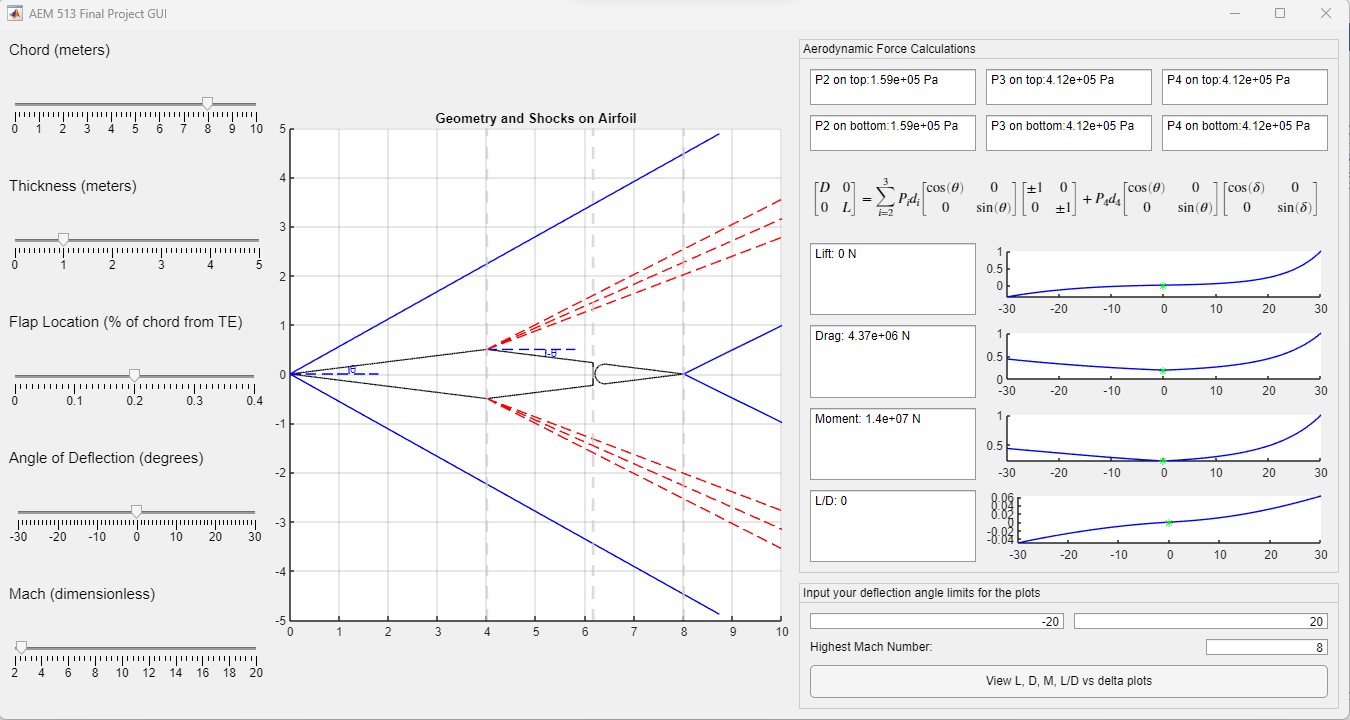
    I coded it all by hand without the help of the built in app designer for Matlab. It is laid out to allow the user to vary sliders which affect the geometry and mach number, it has a visual representation in the middle, it has deflection curves on the right, and finally it has a button that varies the mach to see exactly how the deflection curves are affected for each mach number. 

    Look below for a picture of the GUI with the flap deflected downwards.  

    The overall goal of this project

    Tying back into control systems theory, I wanted to see exactly how we might could take Mach effects into linearizing flight dynamics. The idea is that the flow will behave based on Mach number, which might cause our controllers to not be as effective due to the potential nonlinearities of changing Mach number. One could then look into robust control such as H infinity or mu synthesis to ensure adequate controls, but that development was beyond the scope for this course which focused on compressible flow. 

    I found that the lift coefficient derivative appears as a quadratic equation, while the drag coefficient derivative behaves more like an exponential equation due to increasing Mach number. These graphs are below. 

  • Concrete Canoe

    Concrete Canoe

    Get on Board Day

    UA has this thing every year called get on board day, and it’s where all of these clubs crowd the quad and display their qualities or projects in order to try and get people to join. 

    I ended up walking all over the quad, but there weren’t many clubs that really interested me. Majority of them were not engineering related, and even fewer were aerospace related. 

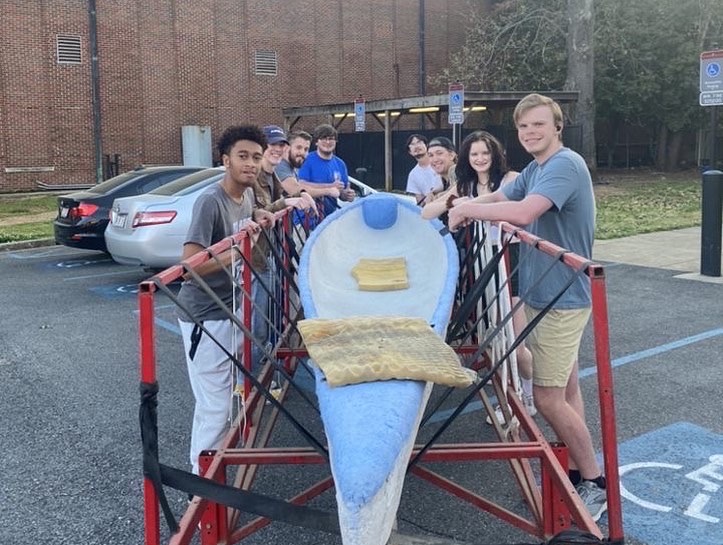
    I roamed around, got numerous contact cards, but nothing really stuck out until I saw this giant canoe built out of concrete. 

    I was later told that specific boat was actually a third of the density of the very concrete that we were standing on, and I was immediately fascinated. 

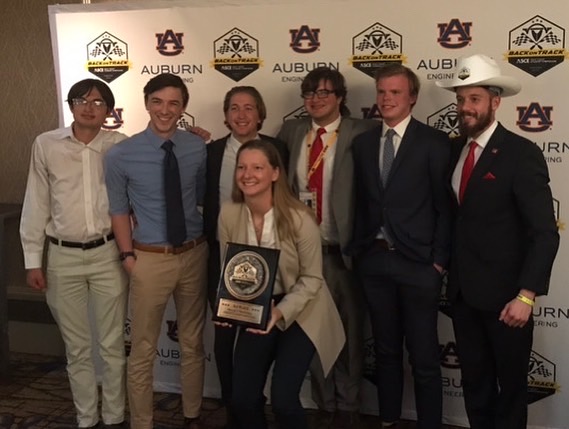
    I helped build the canoe, mix and test out different concrete composites, and later attended the American Society of Civil Engineers Gulf Coast Symposium in Auburn, AL. 

    Construction

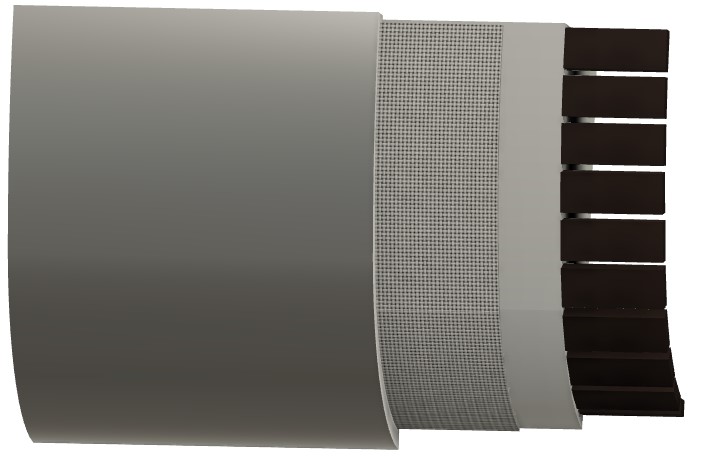
    Here’s a model to represent the process we used for building the canoe. 

    We initially built the frame out of wood in order to ensure that it would be sturdy enough structurally while we put wet concrete on it. 

    From there, we simply layered concrete on top, put down layers of a certain type of mesh, and then put even more layers of concrete on top of that. 

    Other Competitions

    While in Auburn for the concrete canoe competition, we participated in numerous other competitions as well. Me being the ‘aerospace guy’ of the group, I was of course elected to compete in the hydraulics competition and the mystery competition. 

    These competitions, along with concrete canoe and steel bridge, were all taken into consideration for the overall results. 

    Hyrdaulics Competition

    Hydraulics wasn’t too bad, it was a challenge where we had to layer sand in a PVC flume in such a way that water flowing in the flume would carry away as little sand as possible. In addition to this, we had to take measurements of the outlet diameter, the initial water height, etc. 

    I walked in without a pencil or calculator, and ended up having to scramble to try and get those beforehand.

    The question was about the coefficient of discharge, which I actually had not encountered in my fluid mechanics course. I ended up asking for an equation sheet, got a big ol’ equation packet, found an equation with all the values that we recorded, and solved for the coefficient in the equation. 

    The next day, one of the judges recognized me by face, and congratulated me. He told me my solution was ‘exact,’ and that we placed in second place. 

    Mystery Competition

    The thing about the mystery competition was that what we were doing was a mystery. Big shocker, I know. 

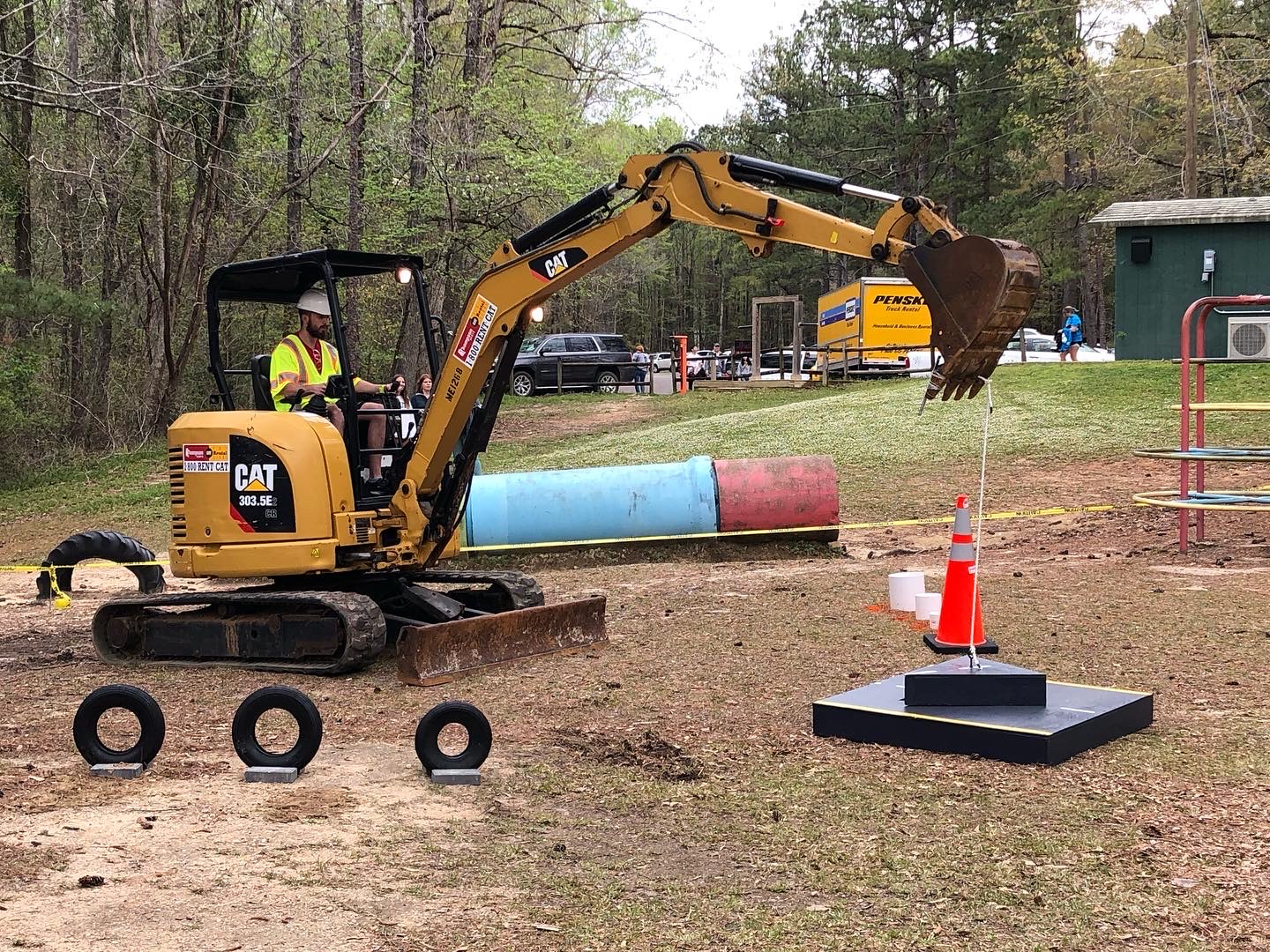
    It ended up being a contest for manuevering objects tied to a string using a mini excavator. Of course I’d never had experience with any kind of machinery even remotely related to this, but luckily my partners had. 

    The biggest challenge with this task was that the object was on a string, and so any movement would cause the object to oscillate. 

    The score was dependent on the time it took for all three partners to complete their task. The tasks were as follows: 

    • fitting the triangle into a triangle shaped hole (I did this one)
    • fitting a tennis ball in three various shaped PVC tubes, and then balancing it on top of the traffic cone
    • balancing tires in between bricks using a ruler taped to the edge of the claw

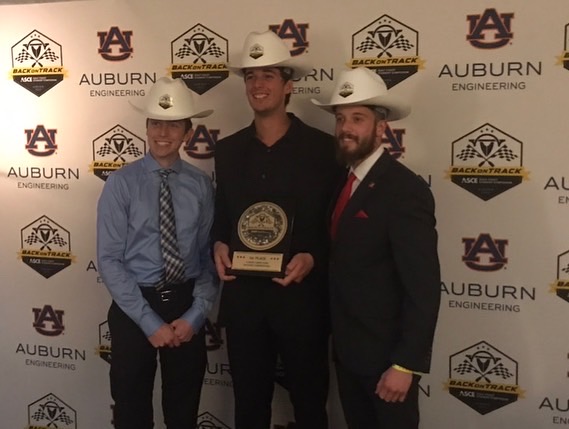
    We ended up placing first, and we even got these cowboy hat shaped hard hats as seen in the picture. 

    Overall Results

    As a team we overall placed third, and for the canoe competition we placed third as well.

    We placed second in the hydraulics competition, and first in the mystery competition. 

    The entire outcome of the competition can be found here. 

  • Why I chose Aerospace Engineering

    Why I chose Aerospace Engineering

    Aerospace just sounds cool

    During high school, I attended the University of Alabama with their UA Early College program. Through it, I was able to take classes during the summer and live on campus for a month. This really opened my eyes to what college life was like, and afterwards I could not wait to get to the next step in my education.

    One of the first things that the program made me do was to pick a major in order to ensure that the classes I took would actually count towards my degree. I knew I wanted to be in engineering, but I wasn’t sure which specific field because I didn’t have any experience in any of them.

    I hadn’t even taken a calculus or physics class yet, but I was still confident that I could do whatever major I wanted. They also were sure to inform me that most engineering prerequisites were either very similar or the exact same classes, so it would not be a hassle to switch between engineering majors if I didn’t like it.

    So, I checked out a list of engineering majors offered by UA, which was in alphabetical order. Aerospace engineering was the first major I saw. I thought to myself, “That sounds tough, I’ll do it.” I chose my major that day, and it was simply based on the name

    Further Specializations

    My next year in high school, I finally took both calculus and physics. I was amazed by the trajectory problems and how someone could mathematically model how an object would move over time. I found a passion for how we can predict how objects would move. 

    I carried this passion throughout my collegiate career, despite most of my courses being centered around structures and aerodynamics. That being said, I decided that I would further my education by going to graduate school and specializing in guidance, navigation and control. 

    I’m so glad that aerospace starts with an ‘A,’ and I’m super grateful for UA for providing the academic experiences that have gotten me to where I am today.